




MUSCAT: Islamic banking in Oman continued its steady expansion in 2025, with assets reaching $25 billion — around 19 per cent of the banking system’s total — after gaining roughly 200 basis points of market share over the past two years, according to a report published on Monday by S&P Global Ratings.
The ratings agency expects growth in Islamic banking to keep outpacing conventional banking, though at a gradually moderating pace as the sector matures. The segment’s share of deposits and credit stood slightly higher, at 22 per cent, reflecting Islamic banks’ smaller securities portfolios.
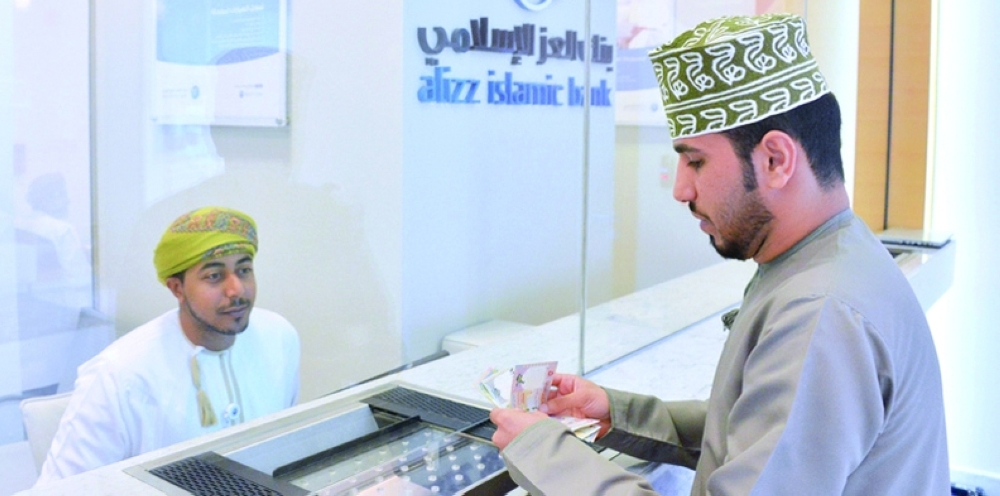
The sector comprises two fully fledged Islamic banks: Bank Nizwa and Alizz Islamic Bank — alongside five Islamic windows operated by conventional lenders. Together they account for more than a third of Islamic banking assets. Bank Nizwa submitted a non-binding proposal last week to acquire Alizz Islamic Bank, subject to regulatory and shareholder approvals.
S&P said the merger, if completed, could create a national Islamic banking champion with scale advantages likely to improve profitability, although the combined entity would remain a relatively small player with less than 7 per cent of the overall market. Bank Nizwa held total assets of $5.3 billion at end-March, Alizz $3.9 billion.
Corporate financing has been the sector’s main growth engine, contributing 63 per cent of gross Islamic financing in 2025 and expanding at a compound annual rate of 12 per cent between 2020 and 2025, against 8 per cent for retail, supported by the development of Oman’s non-oil economy.
The agency cautioned that asset quality may be at a turning point. The non-performing financing ratio rose to 4.2 per cent at end-March 2026, from 3.6 per cent at end-2025 and 2.3 per cent in 2020, and is expected to converge towards the conventional banking average — 4.6 per cent in the first quarter, as portfolios mature. Real estate and construction account for about 12 per cent of Islamic banks’ exposure.
Profitability has improved but continues to trail conventional peers, with return on average assets of 0.9 per cent against 1.2 per cent, partly reflecting a cost-to-income ratio of around 50 per cent versus 44 per cent.
Strong capitalisation, with an average Tier 1 ratio of 15.1 per cent, and a funding base that is 98 per cent customer deposits — among the highest shares in the region — support the sector’s resilience, S&P said, alongside full coverage of non-performing financing.
Looking ahead, the agency pointed to the Banking Law of 2025 and the Central Bank of Oman’s launch of Islamic liquidity management instruments late last year as supportive of growth, while warning that the regional conflict could weigh on real estate, construction and hospitality, though less severely than elsewhere in the region.
Oman Observer is now on the WhatsApp channel. Click here